

Your Comprehensive Bone Health Plan
The Missing Piece in Bone Health: A Comprehensive Plan!
Maybe you have been dealing with osteoporosis for a while or maybe you just learned you had bone loss. In either case, it is likely that you have not been presented with a thoughtful, comprehensive plan.
Bone loss is driven by multiple factors, and addressing it properly requires more than a single lever. That’s where a comprehensive, proactive bone health plan makes all the difference.
OsteoStrong not only helps people directly through osteogenic loading exercises that improve bone density, but we also help you understand all the factors that can impact bone health so that you can put a plan of action around your focus areas.
We help members develop a Personalized Bone Health Plan, that includes:
- Understanding your health history and bone density scans.
- Track and compare bone density scans year over year.
- How an osteogenic loading plan is a key part of rebuilding bone.
- Nutritional education and recommendations.
- Exercises that support bone health and metabolism.
- How certain lifestyle factors impact bone loss and growth.
- Metabolic and hormonal factors you may need to measure and keep track of.
- Gut health and nutrient absorption.
- What biomarkers are key to measure and track (such as vitamin D, calcium, P1NP, CTX, etc).
- Bone detractors - conditions or medications that may accelerate bone loss or impede growth.
- Understanding how other supportive modalities can positively impact the journey (red light, PEMF, meditation, and many more).
- Tracking progress and understanding key checkpoints.
It’s a lot, isn’t it? Well, that’s why we are here - your bone health partner that will understand your situation, empathize with your challenges, and celebrate your success.
Contact us any time to learn more. Our dedicated and compassionate team is here for you.
Disclaimer: The information provided here is for general informational purposes only and is not intended to be medical advice. Always seek the guidance of your doctor or other qualified health professional with any questions you may have regarding your health or a medical condition.
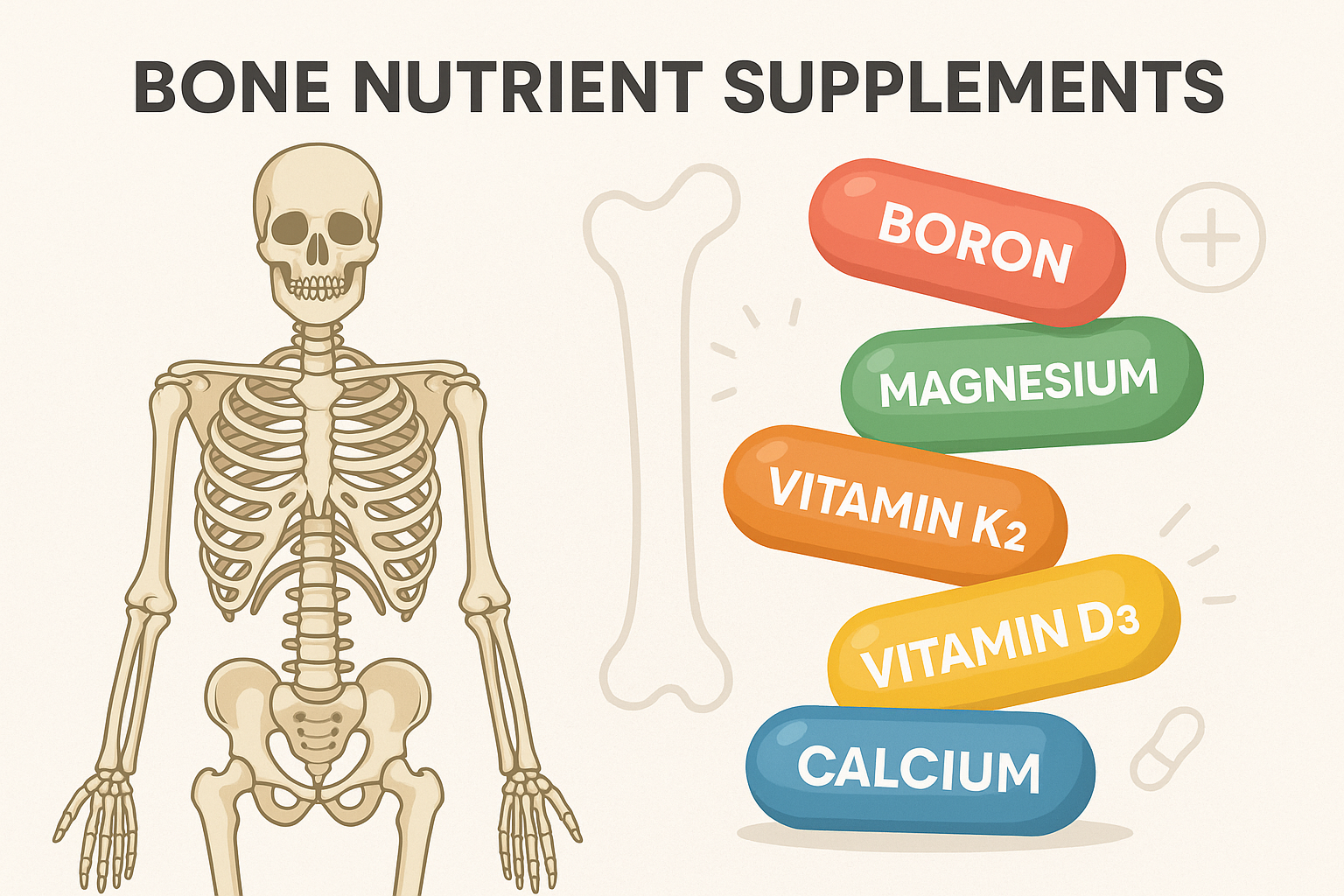
Nutritional Building Blocks for Bone Building
When it comes to bone building, there are four key elements to success: proper loading of the skeletal system, nutrition (adding the things that are good for us), lifestyle choices (limiting the things that are bad for us), and including other exercise to create an active lifestyle. Today we are going to focus on how nutrition can help accelerate the process of bone building. For some people this can be the difference between simply trying to slow bone loss versus achieving something even greater - increasing bone density.
Most people understand that you cannot do intense workouts and then expect to build muscle without having the proper amount of protein. And inversely we cannot expect to just consume lots of protein and expect to build muscle. We need both the trigger to strengthen and the building blocks. The same goes for our skeletal system. We need to trigger a response in the body to grow bone and the proper nutrients to build it. At OsteoStrong, our Spectrum process is the trigger and AlgaeCal is our recommended supplement to support effective bone building.
While there are many nutrients our body uses to build bone, there are some that are very key. Let’s walk through how these essential vitamins and minerals work together for your bone health:
Calcium
- While the most well-known key to building bone, and making up about 60% of our bone, our body needs the right type and amount of calcium. In order to absorb and utilize calcium, it needs to be in a highly soluble form, which is usually going to be naturally occurring in our diet or plant based.
- Your body can only work with so much calcium at a time. You want to get about 1000mg per day, but you want to try and get individual dosing down to 3-500mg at a time, and 3-5 hours apart. This gives your body the time it needs to process and absorb calcium.
- Try to avoid calcium carbonate. This is the most traditional form of calcium. It’s abundant and cheap, and unfortunately our bodies have a hard time absorbing calcium carbonate. And when we don’t absorb nutrients, they need to go somewhere. Free calcium in our bodies can settle in places like arteries and kidneys.
- Read your labels! Beware of supplements that claim to be plant based, but then also add calcium carbonate. Be careful of foods that claim to be rich in calcium, such as almond milk and orange juice, that actually contain calcium carbonate or even calcium hydroxide, which can actually be toxic in larger doses.
Vitamin D3
- D3 (cholecalciferol) is the form of vitamin D produced in human skin when exposed to UVB sunlight and is the most bioactive and preferred form of vitamin D for supplementation.
- D3 is essential for calcium to be broken down properly, which allows for much higher absorption.
- Studies have also shown its role in regulating phosphorus, the balance between osteoblasts and osteoclasts, and the parathyroid, which plays a part in balancing calcium in your body.
- Nearly every cell in our body has D3 receptors and supports a large array of functions in our bodies including immune system, muscles, mood, hormone regulation, organ health, and disease prevention, among others.
Vitamin K2 (MK4 or MK7)
- K2 is a fat-soluble vitamin that plays a key role in calcium metabolism and helps direct calcium to the bones and away from soft tissues, including arteries and kidneys.
- It can activate osteocalcin, a bone-building protein made by osteoblasts. When activated by K2, it helps bind calcium into the bone matrix.
- It can activate Matrix Gla Protein (MGP) which inhibits both calcification of the arteries and kidney stones.
Magnesium
- Magnesium is a macro-mineral involved in over 300 biochemical processes, including bone formation, muscle contraction, nerve signaling, and hormone regulation.
- Magnesium helps convert vitamin D3 into its active and useable form.
- Works with K2 to prevent excess calcium from accumulating in soft tissues.
- Supports proper integration of calcium and phosphate into the bone matrix.
Boron
- Boron is a naturally occurring trace element found in fruits, vegetables, nuts, and certain minerals. Though required only in small amounts, its impact on bone health is important.
- Boron increases the half-life of vitamin D3 in the bloodstream, making it more effective over time.
- Boron helps retain calcium and magnesium in the body by reducing urinary excretion - critical for mineral balance.
- It can also enhance osteoblast activity, regulate estrogen and testosterone, and act as a natural anti-inflammatory.
We recommend AlgaeCal because they have figured out the proper balance of all these nutrients and are currently the only supplements clinically supported to increase bone density. Through our partnership with AlgaeCal, you will find the lowest prices you get on AlgaeCal products without long-term buys or subscriptions.
Our team is here to support you on your journey. Contact us anytime if you have any questions.
Disclaimer: The information provided here is for general informational purposes only and is not intended to be medical advice. Always seek the guidance of your doctor or other qualified health professional with any questions you may have regarding your health or a medical condition.
Cycling and OsteoStrong: The Missing Link in Performance and Longevity
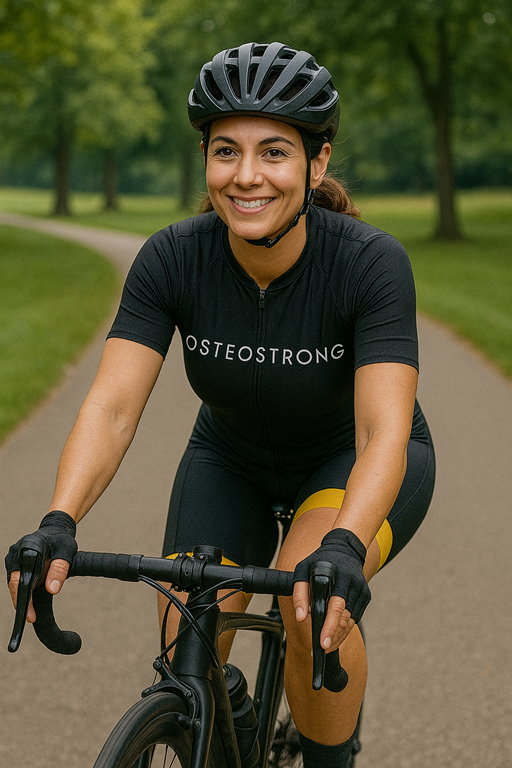
As a cyclist you have likely experienced first-hand how endurance sports like cycling build incredible cardiovascular and muscular endurance—but can often neglect a critical system: your skeletal system.
Cycling is a low-impact sport, which is great for joint preservation and stamina (longer workouts). But here’s the catch: low impact means low bone loading. And without sufficient axial compression (the force needed to stimulate bone growth), cyclists are at higher risk for decreased bone density—especially in the legs, spine, hips, and arms.
That’s where OsteoStrong comes in. At OsteoStrong, we utilize a patented system known as Osteogenic Loading—short, safe, and controlled movements that allow you to apply force many times greater than your body weight to stimulate bone growth naturally. Sessions take only about 15 minutes per week, yet deliver measurable improvements in bone density, strength, and joint resilience.
Why It Matters for Cyclists:
- Better Bone Density = Lower Injury Risk. Falls happen. Stronger bones help prevent fractures.
- Improved Joint and Tendon Resilience. OsteoStrong strengthens not just bones, but the tendons and ligaments that support them—essential for handling long rides, hill climbs, and sprints.
- More Power Output. Muscles only fire as hard as the bones and joints can handle. Increasing bone and joint strength enhances overall force production—translating to better performance on the bike.
- Counteracts Bone Loss from Endurance Training. Long rides and calorie deficits can sometimes lead to bone demineralization. OsteoStrong offsets this with targeted loading.
If you’re a cyclist looking to stay strong, prevent injury, and maintain performance as you age, OsteoStrong could be your secret weapon. Just 15 minutes a week can help close the gap left by your training and give you the structural strength to support your passion for decades.
Book a phone or in-person appointment to learn more.
Ben, Mike, and the OsteoStrong Team
Disclaimer: The information provided here is for general informational purposes only and is not intended to be medical advice. Always seek the guidance of your doctor or other qualified health professional with any questions you may have regarding your health or a medical condition.
Nutritional Building Blocks for Bone Building
When it comes to bone building, there are four key elements to success: proper loading of the skeletal system, nutrition (adding the things that are good for us), lifestyle choices (limiting the things that are bad for us), and including other exercise to create an active lifestyle. Today we are going to focus on how nutrition can help accelerate the process of bone building. For some people this can be the difference between simply trying to slow bone loss versus achieving something even greater - increasing bone density.
Most people understand that you cannot do intense workouts and then expect to build muscle without having the proper amount of protein. And inversely we cannot expect to just consume lots of protein and expect to build muscle. We need both the trigger to strengthen and the building blocks. The same goes for our skeletal system. We need to trigger a response in the body to grow bone and the proper nutrients to build it. At OsteoStrong, our Spectrum process is the trigger and AlgaeCal is our recommended supplement to support effective bone building.
While there are many nutrients our body uses to build bone, there are some that are very key. Let’s walk through how these essential vitamins and minerals work together for your bone health:
Calcium
- While the most well-known key to building bone, and making up about 60% of our bone, our body needs the right type and amount of calcium. In order to absorb and utilize calcium, it needs to be in a highly soluble form, which is usually going to be naturally occurring in our diet or plant based.
- Your body can only work with so much calcium at a time. You want to get about 1000mg per day, but you want to try and get individual dosing down to 3-500mg at a time, and 3-5 hours apart. This gives your body the time it needs to process and absorb calcium.
- Try to avoid calcium carbonate. This is the most traditional form of calcium. It’s abundant and cheap, and unfortunately our bodies have a hard time absorbing calcium carbonate. And when we don’t absorb nutrients, they need to go somewhere. Free calcium in our bodies can settle in places like arteries and kidneys.
- Read your labels! Beware of supplements that claim to be plant based, but then also add calcium carbonate. Be careful of foods that claim to be rich in calcium, such as almond milk and orange juice, that actually contain calcium carbonate or even calcium hydroxide, which can actually be toxic in larger doses.
Vitamin D3
- D3 (cholecalciferol) is the form of vitamin D produced in human skin when exposed to UVB sunlight and is the most bioactive and preferred form of vitamin D for supplementation.
- D3 is essential for calcium to be broken down properly, which allows for much higher absorption.
- Studies have also shown its role in regulating phosphorus, the balance between osteoblasts and osteoclasts, and the parathyroid, which plays a part in balancing calcium in your body.
- Nearly every cell in our body has D3 receptors and supports a large array of functions in our bodies including immune system, muscles, mood, hormone regulation, organ health, and disease prevention, among others.
Vitamin K2 (MK4 or MK7)
- K2 is a fat-soluble vitamin that plays a key role in calcium metabolism and helps direct calcium to the bones and away from soft tissues, including arteries and kidneys.
- It can activate osteocalcin, a bone-building protein made by osteoblasts. When activated by K2, it helps bind calcium into the bone matrix.
- It can activate Matrix Gla Protein (MGP) which inhibits both calcification of the arteries and kidney stones.
Magnesium
- Magnesium is a macro-mineral involved in over 300 biochemical processes, including bone formation, muscle contraction, nerve signaling, and hormone regulation.
- Magnesium helps convert vitamin D3 into its active and useable form.
- Works with K2 to prevent excess calcium from accumulating in soft tissues.
- Supports proper integration of calcium and phosphate into the bone matrix.
Boron
- Boron is a naturally occurring trace element found in fruits, vegetables, nuts, and certain minerals. Though required only in small amounts, its impact on bone health is important.
- Boron increases the half-life of vitamin D3 in the bloodstream, making it more effective over time.
- Boron helps retain calcium and magnesium in the body by reducing urinary excretion - critical for mineral balance.
- It can also enhance osteoblast activity, regulate estrogen and testosterone, and act as a natural anti-inflammatory.
We recommend AlgaeCal because they have figured out the proper balance of all these nutrients and are currently the only supplements clinically supported to increase bone density. Through our partnership with AlgaeCal, you will find the lowest prices you get on AlgaeCal products without long-term buys or subscriptions.
Our team is here to support you on your journey. Contact us anytime if you have any questions.
Disclaimer: The information provided here is for general informational purposes only and is not intended to be medical advice. Always seek the guidance of your doctor or other qualified health professional with any questions you may have regarding your health or a medical condition.
Why has my doctor never heard of this?
Unfortunately, we get this question a lot. Oftentimes it is because this is not considered a medical procedure, therefore traditional doctors may not have been trained on this. However, the science of osteogenic loading goes back to the late 1800's when Dr. Julius Wolff understood that bones adapt when the proper forces are placed upon them. Since then, the science has been further researched, refined, and put into practice by wellness centers, with OsteoStrong being at the forefront. OsteoStrong has been around for over 13 years, with 210+ locations internationally, and we have delivered over 25 million sessions to our members. We highly encourage you to give your doctor our contact information as we are always working to educate and develop strong relationships with everyone in the medical and wellness communities.
Is it really safe?
Our primary focus for members is their safety, and I would argue that this process is safer than going to the gym, for 5 reasons:
1. This process is isometric, meaning you are not working through a range of motion. This is especially helpful for members that have joint issues or pain. It also minimizes many of the variables that often get people hurt at the gym or at home.
2. When doing these 4 exercises, we are putting you in your most biomechanically effective position, which is not only your strongest position but also your body’s safest to bear weight.
3. This is a coach-guided program, you do not do this on your own. Think of this as a certified personal trainer that is going to guide your exercises every time.
4. Our systems measure the force you are applying to yourself in real time. Along with this comes a very safe engagement-hold-disengagement cycle. Meaning you spend several seconds slowly increasing your force, then holding, then slowly disengaging.
5. Our equipment is not doing anything to you, you are the one applying the necessary force. We teach people how to listen to their bodies through the engagement cycle so any adjustments that are needed become obvious.
What results can I expect?
What we love about this process is there are many ways to track our progress.
Let’s start with quantitative results (i.e. the data):
- Bone Density - we are looking to achieve about 5% bone density improvements per year. Some studies show participants gaining much more than that. And others that may be dealing with significant bone detractors and may be looking to just prevent any further loss. The standard in the US for bone density measurements is called a DXA scan. Insurance typically covers this at 65, but we also partner with some organizations that can provide DXA scans for $100 or less. At Lake Country we already have dozens of members getting follow-up bone scans with some pretty incredible results ranging from stabilizing their bone loss to over 20% BMD improvements.
- Bone Quality - this one is more challenging as accessibility to bone quality measurements is more limited and costly. The 2 common forms are a DXA scan that includes a Trabecular Bone Score (TBS) and REMS (Radiofrequency Echographic Multi-Spectrometry) which can give you a fragility score. We provide recommendations on how members can get REMS scans.
- Grip Strength - a key indicator to building both skeletal and muscular strength is grip strength. We monitor this every 90 days and see improvements ranging from 5% to over 25%.
- Balance - another key benefit of strengthening our entire frame (bones, muscles, and joints) is an increase in stability, which we can measure by timing how long you can stand on one foot and graduating to a point of balancing with your eyes closed. Improvements range from 50% to over 300%.
- Gains in Strength - our specialized equipment is designed to capture your session data every week, and you get access to all of that information. It is exciting to watch members’ gains in strength as they progress through our program. It is possible, after about 18 months, for someone to double their overall strength.
Let’s’ move on to the qualitive possibilities (i.e. how you are feeling):
One of our favorite parts of this program is to see how it can positively impact members’ quality of life. Scroll down a little on this link to see over 5,000 5 Star Reviews on OsteoStrong. https://experience.osteostrong.me/affiliate-lake-country
Members report the following improvements:
- Strength - noticeable changes in the ability to lift objects, manage pets, and play with grandchildren.
- Stability - significant changes in balance, fall prevention, and overall ability to walk through more challenging terrain.
- Joint Strength - noticeable changes in joint mobility and flexibility, which leads to reduced pain.
- Reduced Pain - noticeable changes in reduced joint pain, back pain, and inflammation.
- Stamina - greater ability to work in the yard longer, feel more comfortable on long trips, get moving right away after getting out of bed, walking and hiking much longer distances, increased race/competitive performance, among many others.
- Better Sleep - better overall activity and modalities like red light and BioCharger can help regulate circadian rhythm. This is a huge factor in giving the body time to rest and heal.
- Confidence - our favorite feedback is when fear transitions to confidence. Fear causes people to do less and when people feel stronger and safer, they start living again, leading to better overall health and happiness.
Our mission is for you to have your physcial freedom for as long as possible - to add quality years to your healthspan. We love being part of our members' journeys and do not take for granted the trust put into us.
Disclaimer
© 2024 OsteoStrong® Wisconsin, is licensed for use by OsteoStrong® Franchising, LLC.
** No physical exercise is 100% safe, and neither is OsteoStrong. OsteoStrong provides a unique way to emulate high-impact force loading to achieve osteogenic loading, without the high impact. Although not 100% safe, OsteoStrong is significantly safer than attempting high-impact force. OsteoStrong members have reported improved bone density, balance, strength, joint pain, and HbA1c. Results may vary. Consult your doctor. Statements have not been evaluated by the FDA and are not intended to diagnose, treat, cure, or prevent any disease or health condition. OsteoStrong centers are independently owned and managed. The OsteoStrong Scientific Advisor obtained his PhD from Rushmore University, certified/accredited to UK National Standards, but whose accreditation is not recognized in some jurisdictions. All rights reserved.